No results
Try another keyword
Search for brands, model, category and more...
Loading...
Loved by 10,000+ Happy Golfers
Just Installed this new Pro+ screen at my commercial golf simulator. The difference between the old one and this new one is astounding. Not only is it much quieter but the image projection is so much more clearer. It is installed quite tightly using the Bungee balls but there is no significant bounce back.I unequivocally recommend the Pro + impact screen.
Adam S.
Weather is no longer a problem for me, I can be in my garage and on the 7th at Augusta at the same time!
B Edwards
The golf team enjoys practicing with the Puttout training mat. More practice means better putting on the course. The quality of the product is excellent.
Boliver
I already had a large gym in my house, however, I wanted to start practicing my golf at home as well as getting fitter. I didn't want a built in option so the simbox enclosure was the perfect solution. It allowed me to place it wherever I wanted in my room which was a bonus as I couldn't have it against a wall. The quality of the simbox is second to none, I went for the Close Knit Baffle screen as I wanted the most durable screen for the amount of practice I do, it is also super quiet which is a bonus. I can't thanks the team at Golfbays enough, all of the guys are super knowledgeable, you can tell they all have golfing backgrounds. I would definitely recommend.
H.P.
This is an exceptional machine with fast delivery and outstanding customer service from Golf Bays. It’s my second purchase from Golf Bays, they deliver top marks all the time and I would highly recommend!
Jonathan
Solid net strong enough for practicing driver and every other club in the bag. Return slope very handy saving you having to collect balls, they roll straight back to your feet.Recommend also buying some heavy duty ground anchors or pegs to secure it if used in garden.
Liam
Fantastic quality, easy to install and fast delivery. Could not ask for much more. We also purchased a projector and protective enclosure that are brilliant. Creates a very professional looking set up.
Luke M.
Great quality, easy to assemble was hitting balls within hours of delivery which was within 48hrs. Require a few more items to complete the perfect room. Will use again.
Mark W
The box was delivered very quickly including customs clearance, perfect.The SimBox exceeded my expectations, black ball protection very noise-insulating, Impact Screen Pro+ very good for Full HD.Thanks to the video tutorial, it can also be set up alone, but much more relaxed with two people.Simply perfect, highly recommended, thanks to the 6 sizes there is always a place at home, as long as the room height fits.Very convincing qualityIn short: brilliant for the home simulator
Markus K.
Nice and easy to get set up. A few minor issues with software but easily sorted with a quick call to the team at golfbays. I recommend TGC2019 for game play. Not tried Skytraks own courses but I believe they are good.
Peter H
Happy with the quality of the turf and would highly recommend to others.
Scott W
Our SimSquad has spent years testing every simulator on the market. We've selected only the finest options for homes, businesses, and all budgets. Take a look!
GolfBays makes golf simulation accessible for everyone.
Our global (but family-run) business provides unbiased advice on all simulator components – from screens to software. With PGA professional expertise informing our selections, we help create perfect practice spaces in homes and businesses across the US and beyond.
Our support continues long after purchase – because your satisfaction drives us forward!
Loved by 10,000+ Happy Golfers
Watch customers put our simulators to the test.
Bespoke support from PGA Professionals.
SHOP BEST SELLERSLoved by 10,000+ Happy Golfers
The same technology trusted by weekend warriors to the world's best players. Track every shot with pinpoint accuracy for genuine improvement in your game.
Adapt your simulator to suit any space or budget. We design solutions for everything from garage spaces to bespoke commercial venues.
Feel like you're on the course with faithful ball flight physics and true-to-life graphics on the world's best virtual courses.
Built to withstand thousands of full-power drives. Our screens and enclosures keep performing long after inferior products fail.
Clear video guides and tool-free assembly mean you'll be hitting balls within hours, not days. No specialist knowledge required.
Spread the cost with interest-free payment options. Get your simulator now and pay in manageable monthly instalments.
Loved by 10,000+ Happy Golfers
The box was delivered very quickly including customs clearance, perfect.The SimBox exceeded my expectations, black ball protection very noise-insulating, Impact Screen Pro+ very good for Full HD.Thanks to the video tutorial, it can also be set up alone, but much more relaxed with two people. Simply perfect, highly recommended, thanks to the 6 sizes there is always a place at home, as long as the room height fits. Very convincing qualityIn short: brilliant for the home simulator.
Markus Kocher
Had the very original enclosure this is a big upgrade . Golfbays are hard to beat ….
Ian Moore
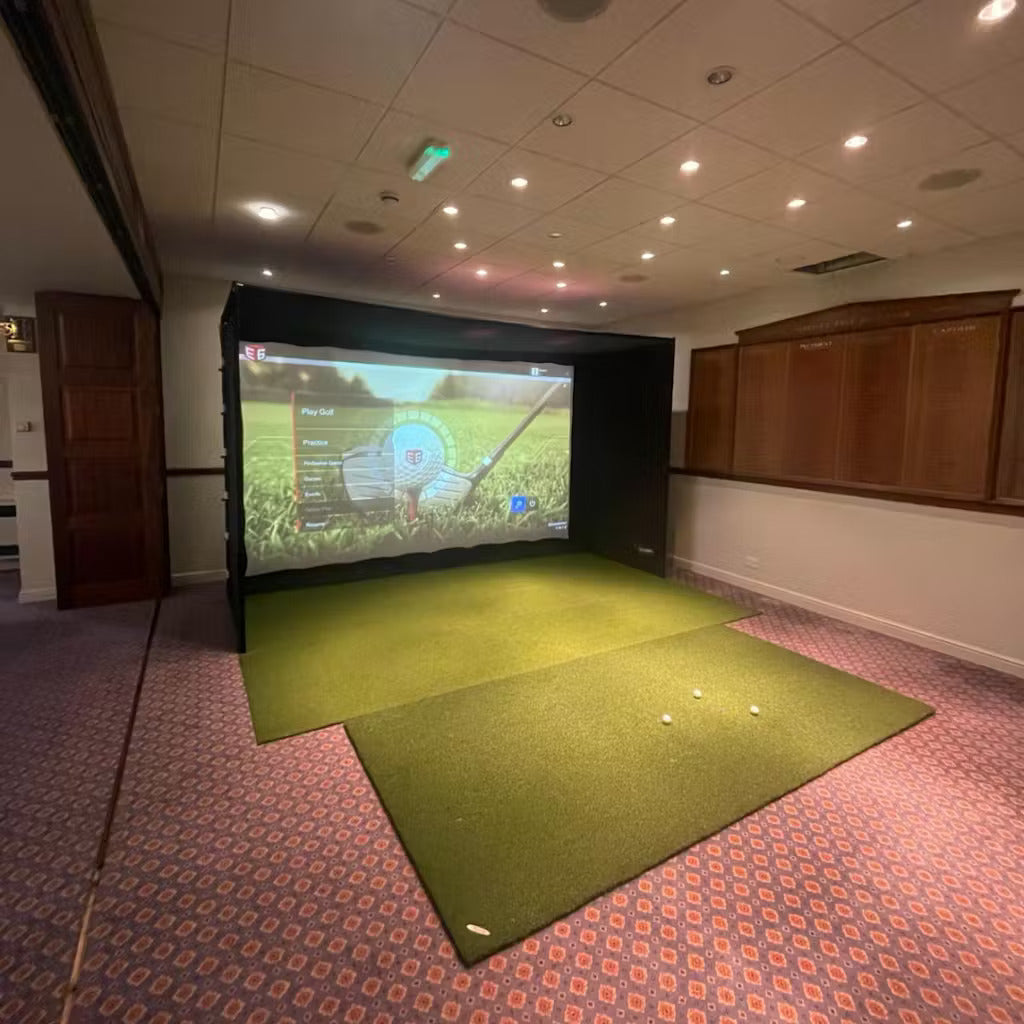
We bought this enclosure along with the rest on the set up for my golf club, Alderley Edge GC where it looks fantastic in the disused snooker room. It has had loads of use with no signs of wear and the guys were very easy to deal with. Would buy again.
Sean Hall
Just Installed this new Pro+ screen at my commercial golf simulator. The difference between the old one and this new one is astounding. Not only is it much quieter but the image projection is so much more clearer. It is installed quite tightly using the Bungee balls but there is no significant bounce back.I unequivocally recommend the Pro + impact screen.
Adam Smith
I've recently has a full Protee VX golf simulator room installed and i couldn't be happier, all i can say is WOW!Massive thanks to Rob and Harrison @Golf bays and the team for such an amazing experience, from sales to installation the whole process was seamless, the quality of the installation is 1st class.I would highly recommend Golf bays, thank you for a fantastic service.
Iain Hackett
See GolfBays in Action!
Unsure which setup suits your needs? Book a FREE consultation today! Our team will guide you through options tailored to your space and budget. Try our selection of technology out for yourself or ask questions directly on a consultation call – with no obligation whatsoever.
Loved by 10,000+ Happy Golfers
At GolfBays we will support you on every step of your simulator journey:
Our high-quality golf simulator products are trusted by PGA Professionals and renowned global brands whether its home practice or a coaching setup – GolfBays delivers equipment worthy of those who play for a living.
Quality simulators without the eye-watering price tag. From commercial setups to home solutions, we cover all budgets and spaces. Use our 0% finance and start improving today, regardless of budget constraints.
Our screens and enclosures take your hardest hits without complaint, built to withstand both shanks and perfect drives. Still swinging years later? That's our quality promise delivered.
Oliver
(Operations Director)
Oliver@Golfbays.com
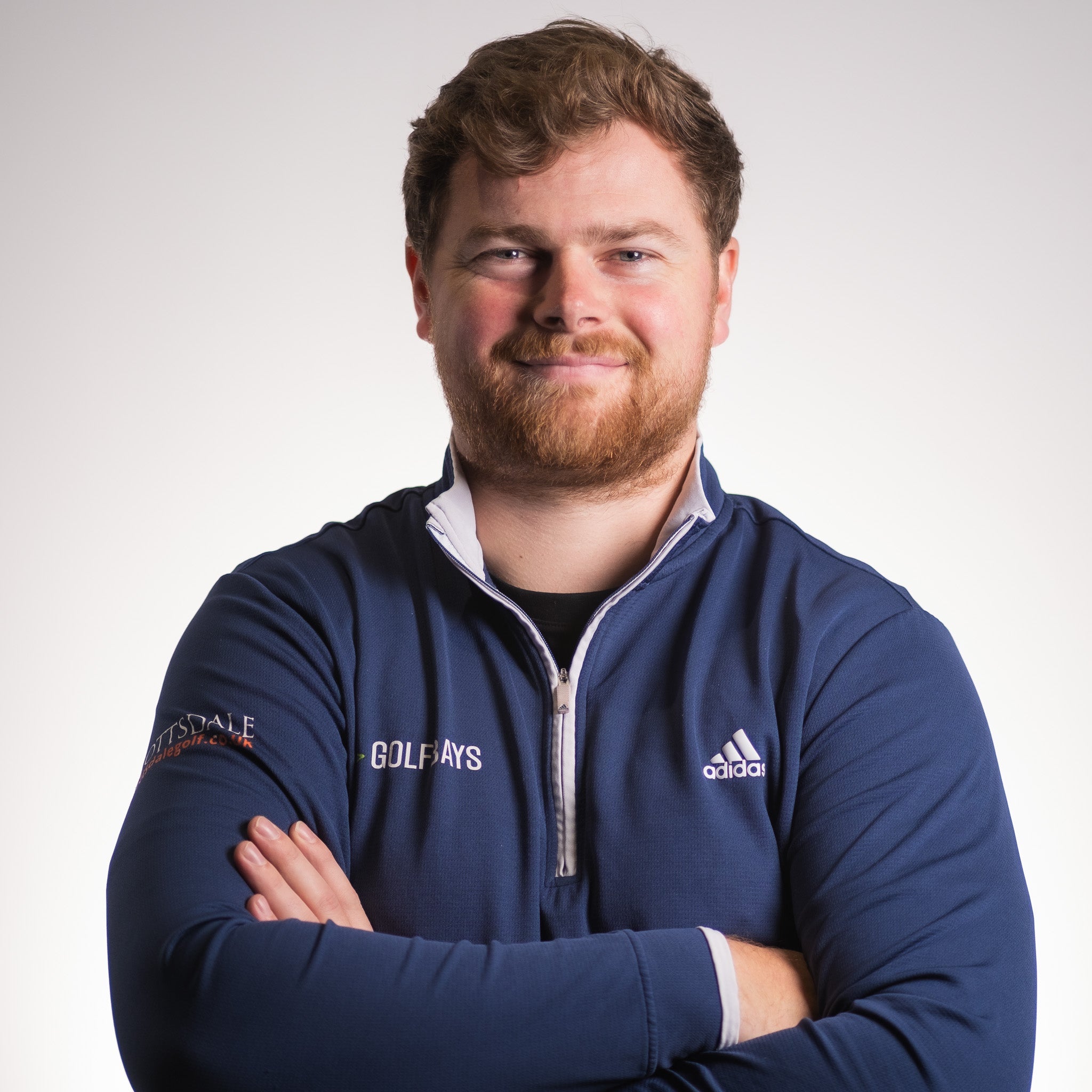
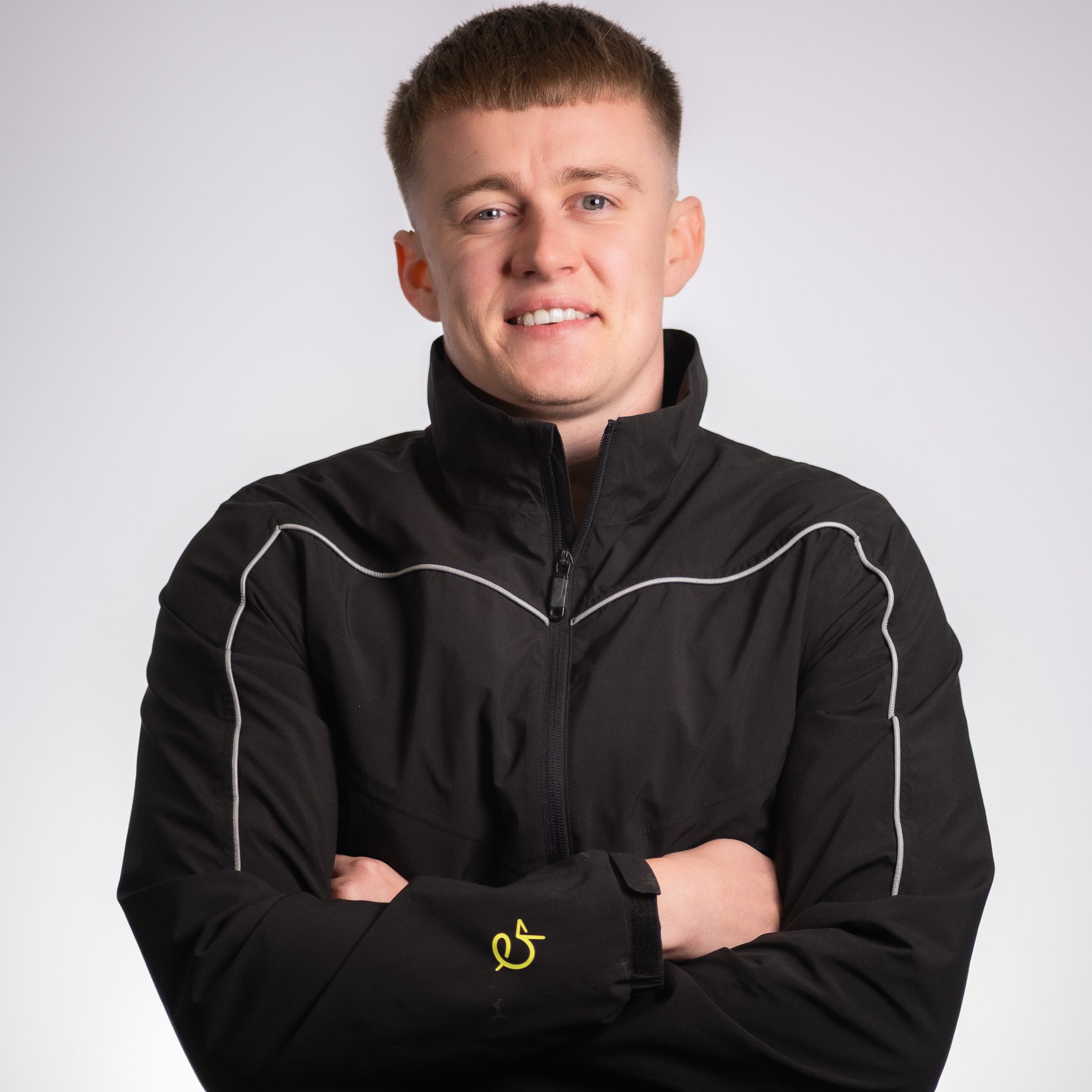
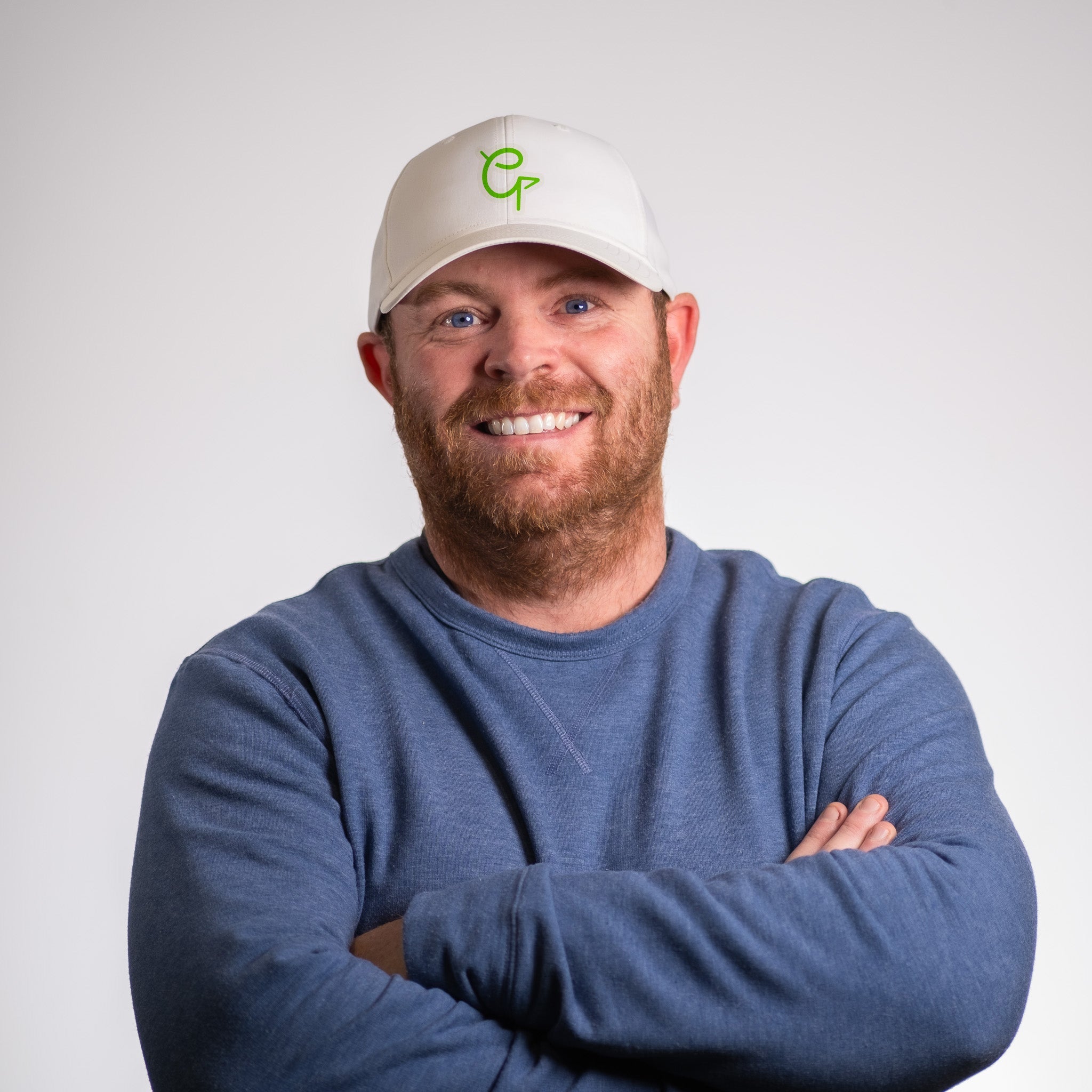
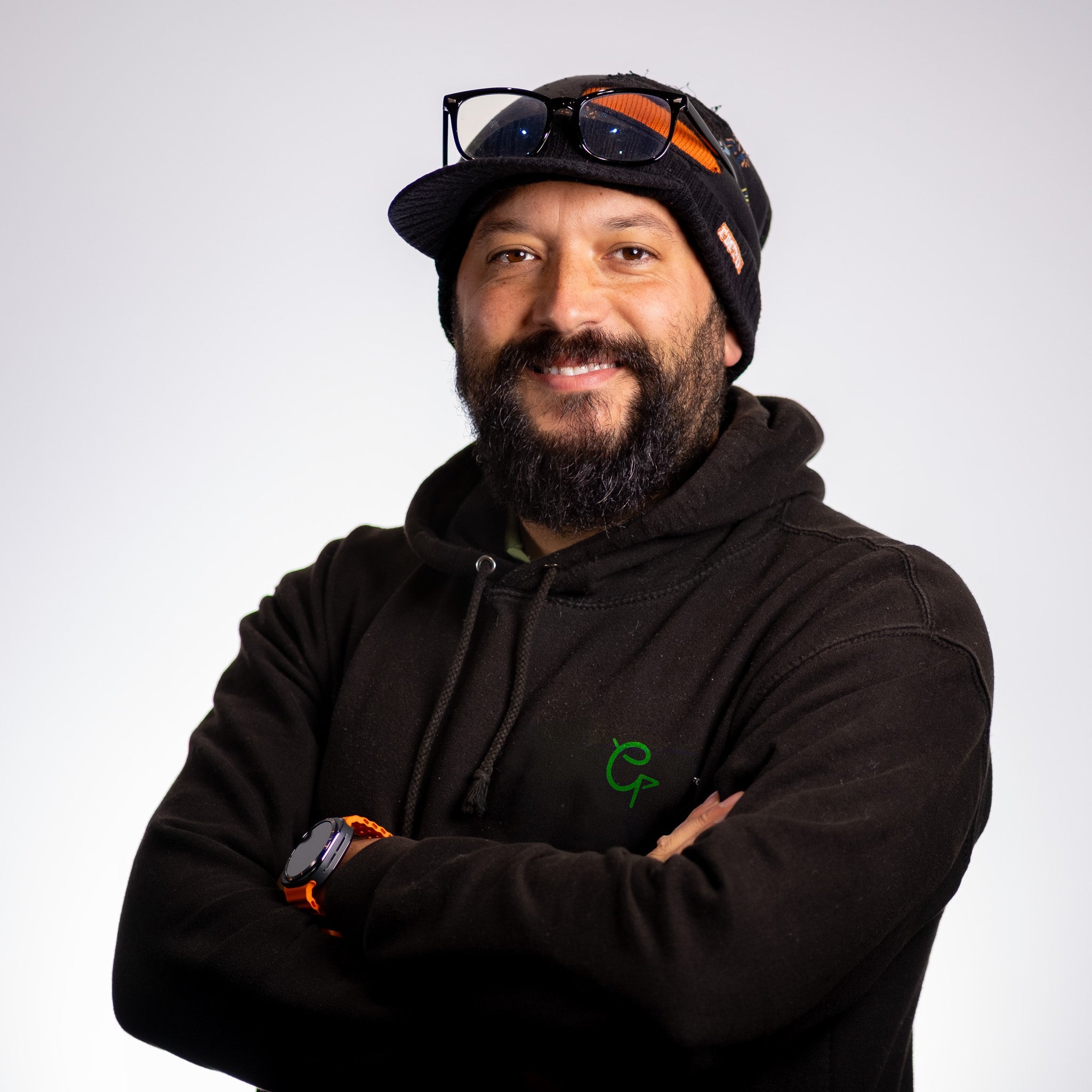
Oliver ensures everything runs smoothly—from sales and shipping to supplier relations. With a background in telecoms and finance, he brings top-tier management expertise to GolfBays. He’s also had the unique experience of setting up a golf simulator at Elstree Studios for a Sky One show! Outside of work, Oliver enjoys football and spending time with his family.
Harrison
Sales & Golf Tech Specialist
Harrison@Golfbays.com
Harrison is a qualified PGA Professional with over 5 years of teaching experience in the golfing industry. Harrison brings with him over 10 years of industry golfing knowledge to help you build your own golf simulator incorporating the latest golfing technology to meet your requirements. Harrison’s daily duties include online consultations and in person demos on the latest technology. He also makes social media content for Instagram, Facebook, YouTube and the website, testing and reviewing new products. He has also attended Corporate Events for GolfBays including The Open at Albert Docks in Liverpool and at the Top of the Shard in London for Scottsdale Golf. Did you know that Harrison made his first TV debut on the shopping channel Ideal World! When not working Harrison enjoys playing golf and going out for food and drinks
Jack
Logistics & Customer Support
Jack@Golfbays.com
Jack brings with him over 10 years’ experience working in the hospitality industry in a customer facing role. He has a degree in Sports Business Management and Coaching. Jack is the “Jack of all trades” and his daily duties include providing his customer service expertise on livechat, phone calls, sales, international export and domestic shipping. Jack has even assisted Merv with a couple of golf simulator fit outs. Did you know that Jack is the first employee outside of the family business. Jack has worked for GolfBays for over 3 years and has grown with the business. In Jack’s spare time, he enjoys playing golf and rugby. He is also a massive Liverpool FC supporter. He enjoys travelling and has previously spent 8 months in Australia!
Jamie
Sales - Tech Support
Sales@Golfbays.com
Jamie is a qualified PGA Professional with over 27 years of experience in the golfing industry. Jamie has been in the golf simulator industry for over 10 years working with Pro-Tee in sales & development. Jamies daily duties include online consultations and in person demos on the latest technology & providing tech support to all our cutomers either over the phone or video call. Jamie still competes in regular PGA competitions.
Merv
Director - Warehouse
sales@Golfbays.com
Merv has over 40 years of experience as an engineer with metal and fabrication expertise. Merv is a co-owner of GolfBays and is responsible for the operations in our warehouse. His daily duties include packing your parcels, ensuring your orders are sent out, cutting your turf and designated forklift truck driver! Did you know that Merv came up with the business name “GolfBays”. In the earlier days our first ever golf bay was an indoor enclosure, as a protection against the weather. This was before the days when indoor studios had really caught on and those that were on the market were fearfully expensive. When not packing your parcels, Merv enjoys playing golf and going for drinks and food at his local pub.
Jayne
Facilities
Sales@Golfbays.com
Jayne has over 15 years of experience working in a High School as a Teaching Assistant and brings with her a wealth of organisational expertise. Jayne’s daily duties include taking custom impact screen orders to our seamstress Sue to alter, assisting Merv in the warehouse with packing, general organisation in the office and assisting Rob with various tasks. Did you know that Jayne has a City and Guilds in Horticulture and when not working enjoys gardening, spending time with her grandchildren and going out for food and drinks.
James
Creative Director
james@Golfbays.com
James had been working as a professional photographer & videographer for the last 6 Years. James has been involved with creating and editing content for Golf Bays for the last 2 years. James' daily duties include Filming and editing videos for Golf Bays social media & Youtube Channel, Photographing products for the website & running the new GolfBays Podcast - Putting It Into Perspective 👀 Outside of work James is a keen amateur golfer playing off a handicap of 4
Victor
Marketing Nerd
victor@golfbays.com
Victor brings with him over 9 years of sports performance marketing experience, having managed over £37M in ad spend. Victor's daily duties include managing GolfBays marketing campaigns, tracking & analysing customer data to make sure you find what you’re looking for. When not working, Victor enjoys playing tennis and a medium-rare ribeye steak. He's originally from Moldova, likes reading biographies, investing in stocks & fish soup. His mother thinks he "works too much" and should "find a girlfriend!"
Rob
Founder & Director
Rob@Golfbays.com
Rob is the Founder of GolfBays and has over 10 years’ experience working as a PGA Professional in the golfing industry. Rob has always had an entrepreneurial passion. Did you know that Rob initially started GolfBays as a side hustle hiring out inflatable golf apparatus for corporate days and selling golf screens on eBay which quickly developed. Due to rapid growth GolfBays is now one of the largest and most recognised independent golf simulator businesses in the UK and internationally of its kind. Rob oversees the business and provides ongoing support to GolfBays including strategic planning and business development. When not working Rob enjoys running and going out for drinks and food.
For comfortable swings with any club, we recommend:
For in stock items, please allow 1-4 days. We also offer worldwide shipping.
They are designed to be very straightforward to erect and dismantle. The whole process should take about 30 minutes. Each kit comes with a step-by-step video guide to help you along the way.
Yes an HD Simbox screen is included along with poles black enclosure and everything you will need. There are two options to upgrade to a Close-Knit Baffle and PRO+ screen for higher durability and improved image options.
All our products are tested over long periods of time at our headquarters. The GolfBays SimBox screen and enclosure can withstand ball speeds of over 200mph. It is also used by numerous PGA Professionals which is a testament to its quality.
Yes, we can. Please get in touch with your specific requirements and we will do our best to meet your needs. We will always aim to work within your space limitations.
Yes, apart from the quad pro and Pro+ impact screens.
Unlike most suppliers we offer a minimum of 6 months warranty on all our screens for peace of mind. Please ensure you use clean balls and clubs to extend the life of your screen as they will need to be replaced from time to time.
Discover the latest insights, tips, and trends in indoor golf and golf simulation technology.
Choosing the best launch monitor for golf coaching isn’t the same thing as choosing the best launch monitor for a home simulator.
A home golfer might want distance numbers and virtual rounds. A golf coach needs something different: Trustworthy data, a fast setup, clear feedback for students, software that supports your teaching style, and - importantly - enough durability to survive daily use by people who definitely don’t all strike it like Scottie Scheffler.
It would be a mistake to think there’s one best launch monitor for every golf coach out there. We hate to break it to you, but there isn’t.
That’s because the best launch monitor for a PGA coach working from an outdoor range is not necessarily what’s best for an indoor coaching studio. Likewise, a club fitter has different priorities to a mobile coach running lessons across multiple venues, who in turn needs something different compared to a commercial simulator business running back-to-back bookings all day.
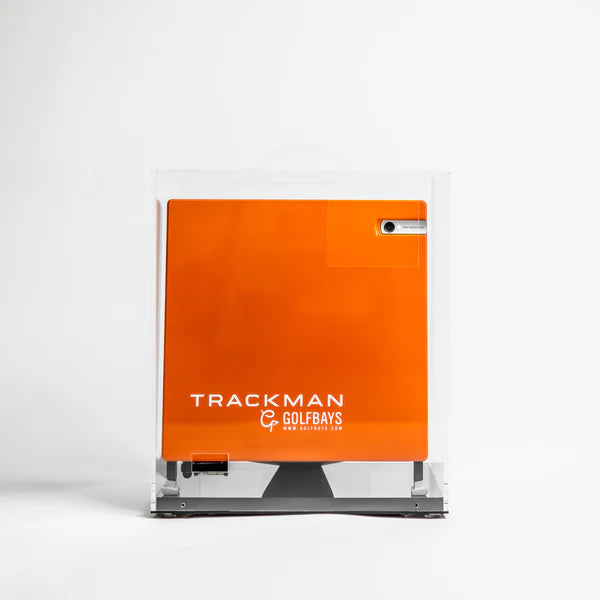
So instead of giving you a simple list of expensive orange boxes and shiny overhead systems, in this guide we try to break things down by coaching context.
We’ll look at the launch monitors that make sense for serious coaching, the workflows they support, and the devices we would be careful about recommending as purely professional tools.
Let’s get into it.
| Coaching context | Best launch monitor options |
|---|---|
| Elite coaching and outdoor range work | TrackMan 4, FlightScope X3 or X3C |
| Club fitting and high-end technical coaching | Foresight GCQuad, Foresight QuadMAX, TrackMan 4 |
| Fixed indoor coaching studio | TrackMan iO, Uneekor EYE XO2, Uneekor EYE XR, Foresight Falcon, Foresight GCHawk |
| Indoor simulator coaching bay | Uneekor EYE XO2, ProTee VX, Foresight Falcon, TrackMan iO |
| Independent PGA coach | Foresight GC3, FlightScope Mevo+ or Mevo Gen2 with Pro Package, Full Swing KIT |
| Mobile coaching and range lessons | FlightScope X3 or X3C, FlightScope Mevo+ or Mevo Gen2, Full Swing KIT, Foresight GC3 |
| Video-led coaching | Full Swing KIT, Uneekor EYE XO2 with Swing Optix, FlightScope with video tools |
| Budget-conscious coaching tool | FlightScope Mevo+ or Mevo Gen2 with Pro Package |
| Worth considering, but not yet a standard coaching choice | Garmin Approach R50 |
| Better suited to golfers and practice than professional coaching | Garmin R10, Rapsodo MLM2PRO, Square Golf, Shot Scope LM1 |
Before comparing models, let’s get clear on what actually matters.
For golf coaches, a launch monitor is not just a device for measuring distance. It can add huge value to what you’re doing by influencing how quickly you can diagnose the problem, how clearly you can explain it, and how convincingly you can show progress over time.
Because of those three elements, we think the buying criteria are a little different from your usual home simulator checklist.
If a student makes a swing change and the numbers move, you need to know that movement is real. Inaccurate data is worse than no data at all, because it sends the lesson in the wrong direction and can reinforce unhelpful technical habits.
For coaching, the core numbers need to be repeatable and credible. Ball speed, launch angle, spin rate, carry distance and launch direction matter. But serious instruction often depends on club delivery data as well: club path, face angle, face to path, angle of attack, dynamic loft, low point and strike location.
Ball data tells you what happened. Club data helps explain why.
A player who keeps missing right might need to understand path, face angle, strike, dynamic loft or angle of attack. Without club data, you can still coach, but you are working with a thinner picture.
For serious coaching and fitting, club data is not a luxury. It can be the difference between describing symptoms and diagnosing causes.
Impact location is one of the most useful pieces of feedback in a lesson. A toe strike, heel strike, high-face strike or low-face strike can explain ball speed, spin, curvature and launch far more quickly than a long lecture or demonstration.
For coaches and fitters, strike location is especially valuable because it connects the student’s feel with the actual contact point. Golfers are notoriously unreliable narrators of their own swing, so go for a launch monitor that gives you the truth.

Sure, data is powerful, but coaching is rarely just about numbers.
A good coaching workflow links what the club and ball are doing with what the player is doing - and that’s where video comes in. Face-on and down-the-line views can help connect movement patterns to the moment of impact, while slow-motion replay can make a technical change easier to understand.
This is why coaching software matters as much as the launch monitor itself.
Video and replay capabilities also give coaches the chance to improve the insights they can offer to students, and add extra value to sessions.
If you run structured coaching programmes, reports and student profiles are a big part of the equation.
A one-off lesson can survive with a few screenshots and a conversation, but long-term coaching needs better continuity. Ideally you want tools that can help you track progress, revisit baseline data in the future, compare sessions, and give students something useful to take away.
For coaches selling programmes rather than isolated lessons, reporting should be part of the product.
If you coach players over several sessions, reporting gives you a record of where the player started, what changed, and whether the work you are doing is actually moving the right numbers.
But not every launch monitor handles this in the same way. Let's take a look.
TrackMan arguably has one of the strongest all-round coaching ecosystems. Its software brings together shot analysis, testing, video, performance data and player history, making it ideal for academies and coaches running structured development programmes.
Foresight is particularly strong for technical coaching and fitting reports. FSX Pro lets coaches review sessions, compare shots and share detailed ball and club data. That works well when the lesson is built around measurable changes to delivery, strike or equipment. A fitter comparing heads, shafts or setup changes can leave the player with something much more useful than a vague memory of which combination felt best.
Uneekor is a strong option for indoor coaches who want data and video in the same workflow. VIEW supports player profiles, Power U reports, impact replay and swing video, with higher software tiers allowing coaches to manage more student profiles. Pairing an EYE XO2 or EYE XR with Swing Optix? You can connect your player's movement, impact and resulting ball flight in one place.
The important point is that the best reporting system depends on what happens after the student leaves the bay. If you coach programmes rather than isolated lessons, choose a platform that makes progress easy to record, revisit and explain. That adds value to the student experience, and isn't just another folder of migraine-inducing numbers.
This is a massive issue for indoor coaching.
A floor-standing camera-based launch monitor can be excellent, but if it needs repositioning every time a left-handed golfer steps in, that slows the session down and creates friction. In a one-to-one lesson, that might be manageable, but in group coaching, club fitting, corporate sessions or simulator bays, it’s a little issue that can become a big annoyance.
Overhead systems and radar units tend to handle mixed-handed use more smoothly, because the device doesn’t usually need to be moved between shots.
No coach should waste the first 10 minutes of every session levelling hardware, calibrating alignment and apologising to a student while the software sulks.
If you coach outdoors, auto-levelling, alignment tools and reliable range setup matter. If you coach indoors, fixed installation can be worth the extra cost because it protects the flow of your sessions.
The best launch monitor is not always the one with the biggest spec sheet. It may be the one that lets you teach without the technology getting in the way.
TrackMan 4 remains the benchmark for elite golf coaching, especially outdoors.
It combines radar and camera technology, measures a comprehensive set of club, ball, and putting parameters, and is widely used across tour, academy, fitting, and high-performance environments.
For a coach working on an outdoor range, TrackMan 4’s strength is full-flight tracking. That matters because outdoor ball flight gives you the whole picture from impact to landing. If you are coaching trajectory, wind performance, distance control, curvature, wedge shots or driver optimisation, full-flight radar is a serious advantage.
TrackMan 4 is not just useful because it measures a lot of things. It works because the data ecosystem is mature.
When we say mature, we mean:
Clear ball and club delivery data
Putting and short-game functionality
Outdoor and indoor use
Strong testing modes
A recognised brand that students trust
A software environment built around performance improvement
A good fit for academies, performance centres and fitting studios
TrackMan also has strong perceived authority. Realistically, this matters commercially. If you are running a premium academy or performance coaching business, students often already understand what TrackMan is. That reputation can support your bookings and lesson experience before the first ball is hit.
Let’s start with the obvious one: TrackMan 4 is expensive, and it is not always the cleanest answer for a compact indoor coaching bay. Indoor radar setups need enough ball flight and enough depth behind the ball. In a purpose-built studio, that may be fine. In a tighter space, an overhead or camera-based unit may be easier to live with.
TrackMan 4 is the best choice for elite outdoor coaching, performance academies and coaches who want one of the strongest all-round data ecosystems in golf. It may be overkill for many independent coaches, but there’s a reason it’s become the standard-bearer for professional coaching.

For club fitting and technical coaching, the Foresight GCQuad is at the top of our suggestions list.
The big strength here is camera-based impact measurement. Foresight’s high-end portable units sit close to the ball and capture impact conditions in detail. For club fitting, that is exactly where the useful information lives.
TrackMan is still very strong for fitting, particularly outdoors, but Foresight has become a serious standard for indoor fitting and strike-based analysis.
The GCQuad makes sense when a coach or fitter needs detailed feedback on impact and club delivery.
They are particularly useful for:
Strike location
Club path
Face angle
Angle of attack
Loft and lie information
Ball launch and spin
Fitting sessions
Indoor lessons
Outdoor lessons where portability matters
For fitting, the ability to connect club delivery, ball flight and impact location is vital. For example, a player might think they need a different shaft, but the data could show they are striking it low on the face with too much dynamic loft.
Portable Foresight units are side-mounted, so left and right-handed switching will be a reality. If you regularly coach groups or run a simulator bay with both right and left-handed players, an overhead unit would be a smoother choice.
The GCQuad is also a serious investment. This makes sense when the launch monitor is central to your revenue: for example fittings, premium coaching, structured programmes or high-end simulator services. To unlock the GCQuad’s full club-delivery and impact-location capabilities, you need the relevant Club Feature licence and clubface markers - so factor in this additional cost when making your final decision.
The GCQuad is among the best launch monitors for club fitting and serious technical coaching. If your lessons depend on strike, face, path and delivery data, this is an ideal professional tool.
The FlightScope X3 is a strong option for coaches who want advanced radar-based tracking without going down the TrackMan route.
FlightScope X3 is particularly strong for:
Outdoor range coaching
Mobile coaching
Full-flight ball tracking
D-plane analysis
Wedge and trajectory work
Club and ball data
Video with data overlay
Coaches who want a high-end radar system with strong portability
FlightScope also has useful optimiser tools, which can help coaches and fitters show how launch, spin, descent angle and environmental conditions affect performance.
Like any radar system, FlightScope needs enough space to work well, especially indoors. If you are building a compact indoor coaching studio, an overhead or camera-based system may be more straightforward.
The software ecosystem is strong, but TrackMan still has the wider brand recognition among many students and premium coaching environments. That may matter less to a technically confident coach and more to a venue trying to sell premium lesson packages.
FlightScope X3 is an excellent choice for outdoor coaches, mobile performance coaches and data-led instructors who want serious radar tracking. For the right coach, they are not a compromise option. They are a proper professional route.

Indoor coaching has different rules.
Once you move inside, the launch monitor needs to support speed, flow and repeatability. That’s because a fixed indoor studio is not just about getting accurate data. It’s about building a coaching environment that works every day.
Long story short, this is where ceiling-mounted launch monitors become appealing.
Overhead systems keep the hitting area clear, reduce trip hazards and make switching between players easier. They are especially useful when you coach both right and left-handed golfers - which is an inevitable challenge.
If you’re a coach working in a fixed studio, the last thing you want is to move hardware around the mat every time the next player steps in. You want the student to hit, the data to appear, the video to replay and the lesson to keep moving.
TrackMan iO is designed specifically for indoor use. It gives coaches access to the TrackMan ecosystem in a ceiling-mounted format, using radar and camera technology from an overhead position.
For indoor coaches who want the TrackMan brand, software and data environment without placing a unit behind the golfer, the iO is a serious option.
It’s best suited to:
Premium indoor coaching studios
Commercial simulator bays
Coaches who want TrackMan indoors
Facilities where left and right-handed switching matters
Data-led lessons in a fixed environment
The caveat is the cost. TrackMan iO is still a premium system. You’ll need to check which package includes the club data and features you actually need, as different software tiers are available. TrackMan iO’s Home package includes only club speed, while Home Complete and Commercial include broader club data.

The Uneekor EYE XO2 is one of the strongest indoor coaching options for coaches who want data, video and a clean fixed setup.
It’s a front-mounted overhead launch monitor with three high-speed cameras, a large hitting zone, ball and club data, real-time swing visuals and impact replay. It can also be paired with Swing Optix cameras, giving coaches face-on and down-the-line video alongside the numbers.
That combination is genuinely useful for coaching. A student can see the swing, the impact, the strike feedback and the resulting ball flight in one environment.
Uneekor’s reporting and profile structure also matters for coaching businesses. If you are working with students over the long term, student profiles and reports can support better follow-up and add an extra dimension to your offering.
The EYE XO2 is best suited to:
Indoor coaching studios
Coaches who use video heavily
Simulator-based lessons
Left and right-handed player use
Structured student programmes
Premium home studios used for coaching
The main caveat is that full club tracking requires reflective club stickers. That is not a deal-breaker, but in a coaching environment you need to build it into your session process.
The Foresight Falcon and GCHawk are premium overhead systems for coaches and commercial environments that want Foresight’s camera-based data in a fixed bay.
They make sense when the studio needs:
A clear hitting area
Left and right-handed play
Commercial durability
Strong indoor data
A premium simulator and coaching environment
Reduced need to reposition hardware
Falcon is the newer, more compact overhead option, while GCHawk remains a high-end ceiling-mounted system with a large hitting zone. These are not casual purchases by any stretch, but they make sense in a studio where the launch monitor is earning its keep every day.

For fixed indoor coaching, the best options are usually overhead. TrackMan iO is the premium choice for coaches who want the TrackMan ecosystem indoors. Uneekor’s EYE XO2 is one of the strongest options because it combines overhead tracking with video and reporting. The Foresight Falcon and GCHawk are serious commercial-grade choices for premium studios and fitting environments.

The ProTee VX deserves to be in the conversation for indoor coaching bays, especially where the setup is partly lesson space and partly simulator space.
It’s another overhead launch monitor, which means it keeps the floor clear and works well for left and right-handed players.
ProTee VX is strongest when you care about:
A fixed indoor simulator bay
Left and right-handed use
Fast session flow
A clean hitting area
Simulator play alongside coaching
No need for marked balls or club stickers
Lower ongoing software friction compared with some premium ecosystems
The ProTee VX isn’t the obvious first choice for a coach whose business depends on advanced reporting, club fitting workflows or a deeply established coaching software ecosystem. But it is a strong indoor simulator and coaching bay option - just don’t expect a high-performance coaching analysis platform to rival some of the names above.
The ProTee VX is a strong choice for indoor coaches on a budget who want an overhead system, clean left/right-handed use and a simulator-friendly setup.

Full Swing KIT is a credible option for coaches who want to integrate video into their sessions.
Its built-in camera and app workflow make it especially useful for mobile coaching, range lessons and coaches who want to connect swing footage with launch data. The Onform integration also makes it more relevant for coaching than a simple data-only device, because it brings launch monitor numbers into a video coaching workflow.
Full Swing KIT is a good fit for:
Video-led coaches
Mobile coaching
Range lessons
Remote follow-up
Swing analysis linked to launch data
Coaches who want a portable unit with built-in video
For many coaches, the most powerful lesson moment is showing the movement pattern that produced whatever data point you’re looking at. Full Swing KIT leans naturally into that.
Full Swing KIT is not the strongest choice for club fitting, strike location or high-end indoor studio work. It doesn’t sit in the same category as TrackMan 4, GCQuad or FlightScope X3 for deep professional analysis.
But for a coach who teaches through video and wants a portable, simple workflow, it offers plenty.
Full Swing KIT is great for video-led coaches who want launch monitor data to support movement analysis. It wouldn’t be our first pick for high-end fitting, but it’s much more relevant to coaching than many consumer launch monitors.
At the serious end of golf coaching, the most established names are TrackMan, Foresight Sports and FlightScope. You’ll see them in performance centres, fitting studios, academies and outdoor coaching environments because they offer strong data, trusted software and professional credibility.
But that does not mean every coach needs the same setup. A coach working from an outdoor range has very different needs from someone running lessons in a fixed indoor studio. Indoors, overhead systems such as Uneekor and ProTee can make more sense because they keep the hitting area clear, support left and right-handed players more smoothly, and help sessions flow without moving hardware around the mat.
The real question is not what most coaches use. It is what fits the way you actually teach.
TrackMan is one of the benchmark systems in elite golf coaching, especially for outdoor range work where full ball flight tracking is a major advantage. It has the tour presence, the brand recognition and the depth of data that many serious coaches want.
But best is doing a lot of work there. TrackMan is not automatically the best choice for every coaching business. If you are building a compact indoor coaching studio, an overhead system may give you a cleaner setup, easier left and right-handed use, and less day-to-day faff. If you are an independent coach working to a tighter budget, you may be better served by a strong value setup that gives you the core data you need without turning your business plan into a horror story.
TrackMan is excellent. It is not always the most sensible answer.
Yes. Foresight GCQuad is one of the strongest portable launch monitors for coaching, fitting and detailed impact analysis. It is particularly useful when you care about strike location, face delivery, club path, launch, spin and fitting decisions.
The main thing to understand is that GCQuad is a premium tool for premium workflows. It makes most sense if the launch monitor is central to how you earn money: club fitting, technical lessons, structured coaching programmes or high-end studio sessions.
The trade-off is left and right-handed use. Because GCQuad is a side-mounted unit, you may need to move it when switching between right and left-handed golfers. That is manageable in one-to-one coaching, but it can become irritating in group sessions, fittings or simulator environments where speed matters.
Yes, in the right setting. FlightScope Mevo+ becomes much more relevant for coaching when paired with the Pro Package, because that gives coaches access to more useful club delivery data, including metrics such as club path, face to path, face to target, dynamic loft and low point.
It is not the same kind of tool as a top-end radar system or a premium fitting-focused camera unit. But for independent PGA coaches, mobile coaches and coaches who want strong value without jumping straight into the most expensive tier, it can be a very sensible option.
The caveat is that Mevo+ is still a radar unit, so setup space matters. It is best suited to coaches who have enough room behind the ball and enough flight distance to get reliable results. If you are working in a tight indoor studio, a fixed overhead system may be easier to live with.
It depends where and how you coach.
Radar systems are particularly strong outdoors because they can track more of the ball flight. That makes them useful for driver work, trajectory control, wedge gapping, shot shape, distance control and coaching in real-world conditions.
Camera-based launch monitors are often stronger indoors because they capture what happens around impact without needing as much ball flight. That can be ideal for indoor studios, fitting bays and simulator-based coaching.
Overhead camera systems add another practical advantage: they stay out of the way. That matters more than people think. If you coach left and right-handed golfers, run group sessions or want a clean simulator bay, not having to move a launch monitor between shots is a big win.
For fixed indoor coaching, overhead launch monitors are usually the cleanest option. Systems such as Uneekor EYE XO2 and ProTee VX work well because they keep the hitting area clear, support smoother left and right-handed use, and create a more professional coaching environment.
That does not mean every indoor coach needs the same system. If your lessons are heavily data-led, prioritise club data, impact feedback, video integration and student reporting. If your bay is used for simulator hire as well as coaching, prioritise reliability, ease of use and quick session turnover. If your coaching is more movement-led, video integration may matter as much as the launch numbers.
A good indoor coaching setup should not slow the lesson down. If the tech keeps interrupting the flow, it is not helping.
Garmin R10 is not what we would recommend as a primary professional coaching tool. It can be useful for golfers, practice sessions and basic feedback, but most coaches need stronger data, better reporting, more robust workflows and more confidence in the numbers.
That does not make the R10 a bad product. It just means it sits in a different category. For personal practice, casual simulator use or a golfer wanting entry-level feedback, it has a place. For a coach charging for lessons and making technical decisions from the data, we would look higher up the range.
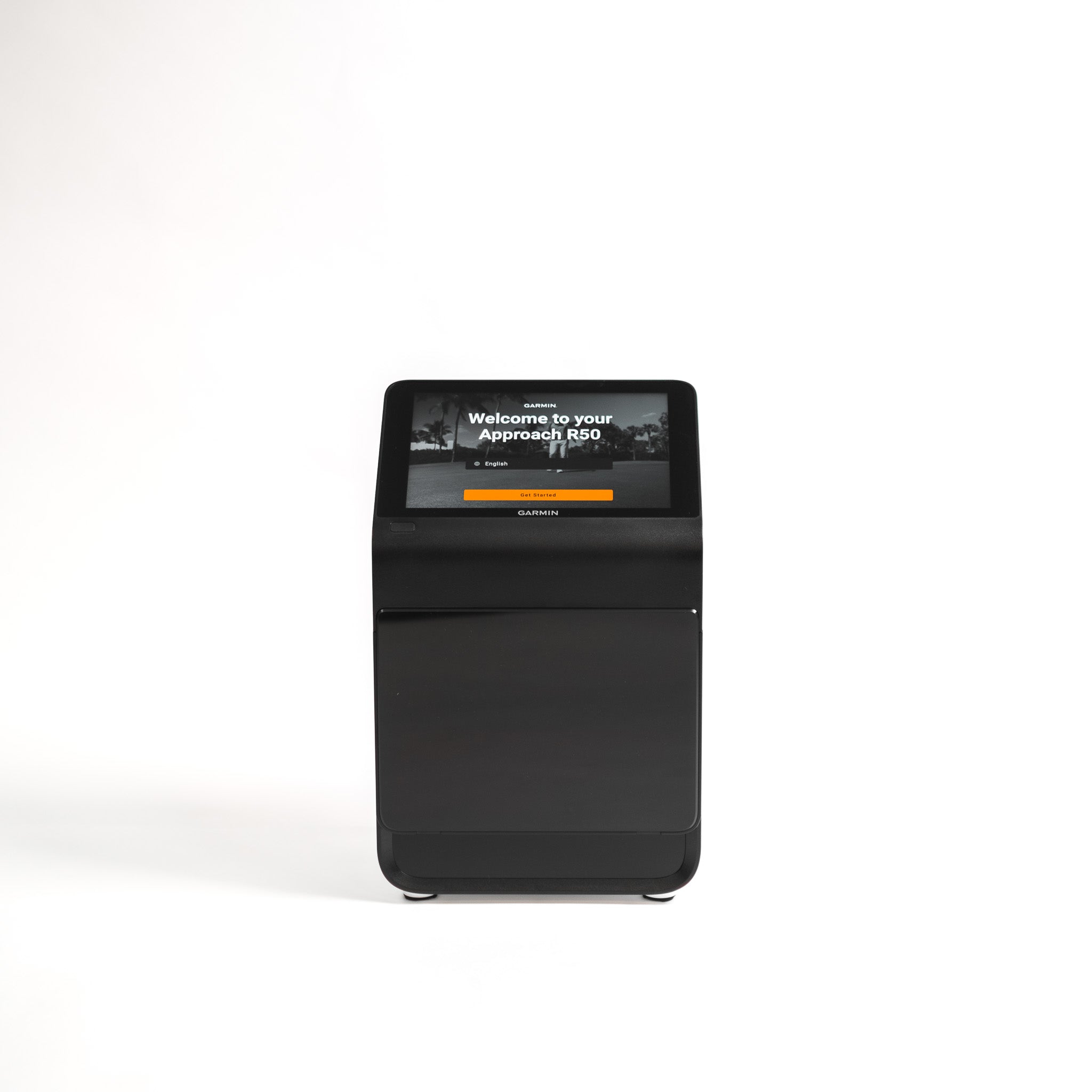
Garmin R50 is a much more serious option than Garmin R10. The built-in screen, impact video and wider set of ball and club metrics make it more relevant for coaches, especially those who want a portable setup that does not rely as heavily on extra devices.
But we would still treat it as an emerging serious-user option rather than a proven coaching standard. It has plenty to like, especially for portable practice and premium home simulator use, but it is not yet as established in professional coaching workflows as the bigger coaching and fitting ecosystems.
For a coach, the question is whether the convenience of the R50 outweighs the depth, reporting and workflow maturity of more established coaching systems.
The most useful data depends on what you are coaching.
For general lessons, ball speed, launch angle, spin rate, carry distance and launch direction give you the basic picture. For technical coaching, club path, face angle, face to path, angle of attack, dynamic loft and low point become much more important. For fitting and strike work, impact location can be one of the most valuable pieces of information on the screen.
But coaches should not drown students in numbers. Nobody improves because they have been shown sixteen metrics and mildly traumatised by a spreadsheet. The skill is knowing which two or three numbers actually matter for that golfer, in that lesson, on that day.
If you sell structured coaching programmes, reports are extremely useful. They help you track progress, revisit baseline numbers, show improvement over time and give students something valuable to take away after the session.
For a one-off lesson, a full report may not always be necessary. A clear explanation and a few key numbers might be enough. But for long-term coaching, club fitting, performance programmes and repeat lesson packages, reporting can become part of the product.
Good reports also help justify the value of coaching. They turn a lesson from something the student vaguely remembers into something they can review, understand and act on.
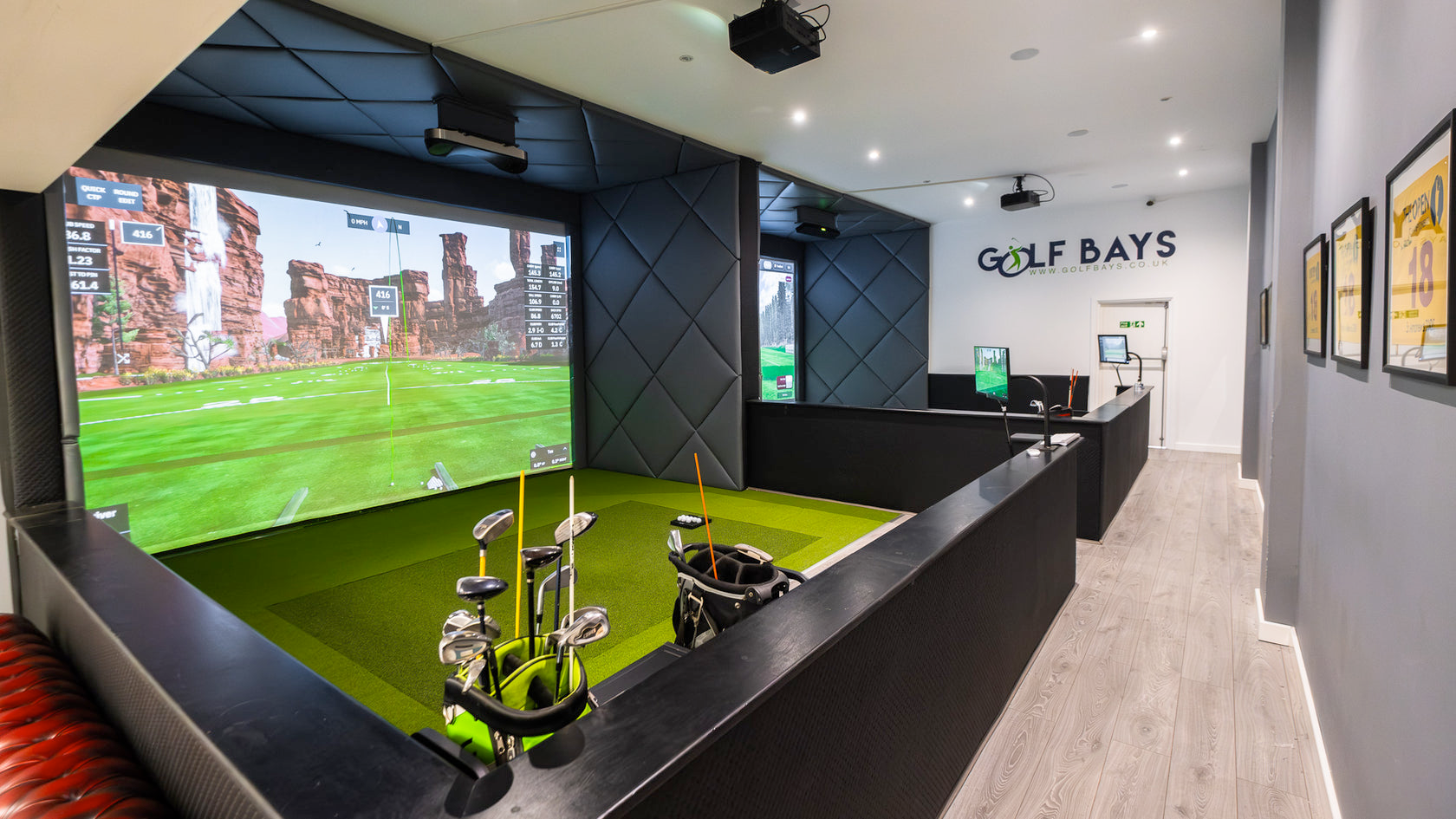
You’ve chosen the launch monitor. You’ve measured the room. You’ve started thinking about screens, mats, projectors and all of the other fun accessories that come with a home golf setup.
Then someone casually mentions that you might need a gaming PC. Brilliant.
It’s another box, another series of cables, and another spec sheet full of numbers that look suspiciously like hieroglyphics.
Lucky for you, GolfBays is here to make this next step simple.
Let’s answer the question in the title first up: No, you do not always need a gaming PC for a golf simulator. Some launch monitors and simulator apps can run from a phone, tablet, standard laptop or built-in display.
But if you want GSPro, FSX Play, premium 3D courses, 4K projection, smoother graphics or a serious permanent simulator room, then yes, a proper gaming PC quickly becomes part of the conversation.
Check out our recommended Gaming PCs >
The important question is not whether every golf simulator needs a gaming PC. It’s what kind of simulator you are building?

| Simulator setup | Do you need a gaming PC? | Why? |
|---|---|---|
| Basic launch monitor practice | Usually no | Many launch monitors work with mobile apps or straightforward practice software. |
| Phone or tablet-based setup | No | Ideal for range sessions, casual practice and simple data feedback. |
| Awesome Golf | Usually no | It is designed to run on modest Windows devices and can work with integrated graphics. |
| Garmin Approach R50 standalone use | No | It has a built-in display and can output to an external screen at up to 1080p. |
| GSPro | Yes | GSPro requires a Windows PC and benefits from dedicated gaming hardware. |
| FSX Play | Yes | FSX Play requires a Windows PC and a suitable dedicated Nvidia graphics card. |
| 4K simulator setup | Yes | Running golf simulator software at 4K is considerably more demanding than standard 1080p. |
| Commercial simulator room | Usually yes | Reliability, graphics quality and consistent performance matter when the system is used heavily. |
That is the short version.
If you want basic practice, you may be able to avoid a gaming PC. If you want a full indoor golf simulator experience with realistic courses, a projector and software like GSPro, you should budget for one.
A launch monitor measures the shot. Simulator software turns that data into a playable golf experience.
That might include:
Ball flight
Course graphics
Shot tracer
Club and ball data
Online play
Practice ranges
Skills challenges
Course conditions
Putting
Multiplayer rounds
Swing video
Performance reports
The more realistic and graphically rich the software is, the harder your computer has to work.
A basic practice app might only need to show carry distance, ball speed and a simple shot shape. A premium simulator package has to render fairways, trees, bunkers, water, shadows, ball physics and camera movement in real time. Ideally without freezing halfway through your once-a-year straight drive.
That is where the gaming PC comes in.
A gaming PC is not needed because golf is secretly a computer game. It’s needed because modern simulator software uses 3D graphics in the same way gaming software does. The graphics card, or GPU, does a lot of the heavy lifting.
You should plan for a gaming PC if you want to run one of the more demanding simulator setups.
GSPro is one of the most popular simulator software options for serious home golf simulator users, and it needs a Windows PC.
For 1080p play, GSPro requires a dedicated graphics card and 16GB memory. For a strong 4K experience, the requirements increase to an RTX 3080 or better graphics card and 32GB memory.
In plain English: GSPro is not something you should expect to run properly from an old work laptop that already sounds like a helicopter taking off when you open too many browser tabs.
If GSPro is part of your dream simulator setup, the PC is not an afterthought. It’s an essential part of the build.

FSX Play is another example of premium simulator software that expects proper PC hardware. It requires a Windows-based PC and Nvidia RTX graphics.
That matters because FSX Play is built around improved graphics and a more immersive simulator experience. The better the visuals, the more the computer has to do.
If you are using software like this, the graphics card is your engine room, not a luxury upgrade.
We know, we know. 4K sounds great and it looks awesome too. It also asks a lot more of your computer.
A 1080p image has far fewer pixels to render than a 4K image. That means a simulator setup that runs happily at 1080p can start struggling when you ask it to push everything through a 4K projector or large display.
If you want crisp 4K visuals on a big impact screen, don’t try to build the system around a bargain PC.
You Are Building a Permanent Simulator Room
If your golf simulator is going into a permanent room, the PC matters more.
That’s because a temporary practice setup can tolerate a bit of inconvenience. But ideally you want a permanent simulator room to feel polished every time you use it. You want to walk in, switch everything on, hit balls and play. Not a weekly ritual of updates, crashes, and stuttering graphics.
A better PC will not fix every possible setup issue, but it will give your simulator a much stronger foundation.
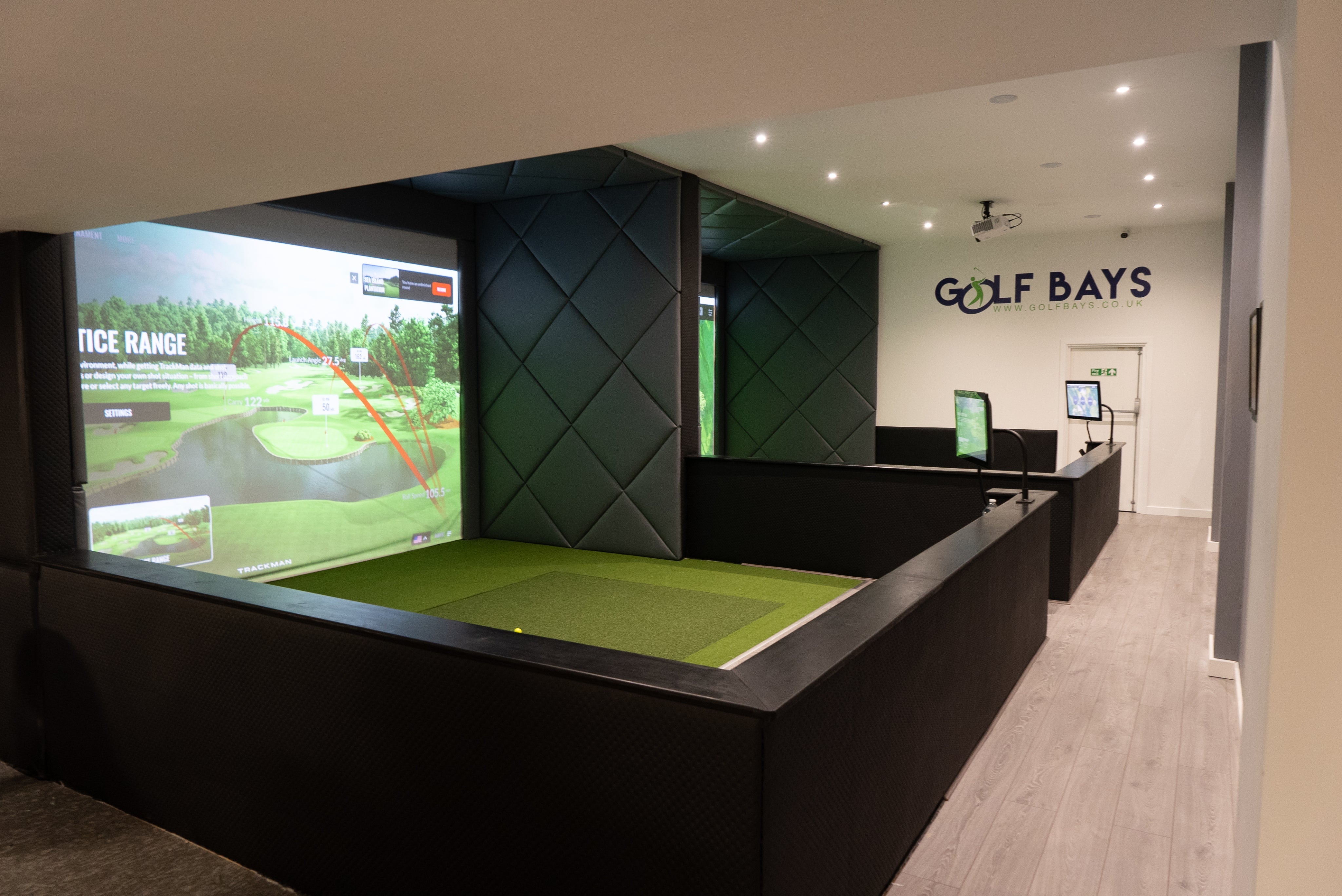
If you are building a simulator for coaching, fittings, club use, hospitality or paid bookings, do not cut corners on the computer.
Commercial users need reliability. If a home setup crashes, it is annoying. If a commercial simulator crashes during a lesson, fitting or booking, it looks amateur and will cost you money.
For a commercial environment, the PC should be comfortably above minimum spec. Commercial setups should not be built around getting by.
A gaming PC is not compulsory for every simulator.
You may not need one if your setup is more practice-led, mobile or casual.
If your main goal is to see numbers like carry distance, ball speed, club speed, launch angle and spin, you may not need a gaming PC at all.
Many launch monitors come with their own app or can connect to a phone or tablet. For practice, gapping sessions and simple feedback, that can be plenty.
Not every golfer needs a full virtual course running in front of them. Sometimes you just want to know whether your 7 iron is actually going 150 yards or whether that number has always just been wishful thinking.
Some launch monitors are designed around mobile use. They work naturally with smartphones or tablets and are built for portability rather than permanent simulator rooms.
That makes sense for golfers who want to practise at the range, hit into a net, work on distances or use lighter software.
But there is a catch. The launch monitor might be mobile-first, but the simulator software might not be. If you connect that same launch monitor to GSPro, the PC requirements come from GSPro, not from the launch monitor.
This is one of the biggest areas where buyers get caught out.
Awesome Golf is much lighter than many premium simulator software packages. It can run on Windows 10 or later, with modest processor, memory, storage and graphics requirements.
That makes it a strong option for golfers who want fun, accessible simulator play without building the whole room around a high-end PC.
It is not trying to be the same thing as a demanding 4K simulator environment. And that is fine. Not every setup needs to look like a broadcast from Augusta.
The Garmin Approach R50 changes the conversation because it has its own built-in display and can connect directly to an external display using HDMI. Garmin states that the output resolution is 1080p.
That makes it an interesting option for golfers who want to reduce PC faff.
However, this does not mean the R50 removes every possible need for a PC in every setup. If you want to use third-party PC simulator software, the requirements will depend on that software. But for golfers who want a cleaner, more self-contained simulator route, R50 is a serious option.
This is where the confusion usually starts.
A normal laptop can be excellent for work, emails, streaming, spreadsheets and browsing. That does not mean it’s built for golf simulator software.
The difference is usually the graphics card.
A lot of standard laptops rely on integrated graphics. That means the graphics processing is built into the main computer chip. Fine for normal everyday use, less fine when you ask it to render a full 3D golf course while processing launch monitor data and outputting to a projector.
A gaming PC or gaming laptop usually has a dedicated graphics card. For simulator software, that is the part that often matters most.
Here is the simple version:
| Computer type | Best for | Watch out for |
|---|---|---|
| Standard laptop | Basic apps, admin tasks and light launch monitor use. | Often underpowered for demanding golf simulator software. |
| Gaming laptop | Flexible simulator rooms, garages and portable setups. | Usually costs more than a desktop offering similar performance. |
| Gaming desktop | Permanent simulator rooms, 4K setups and commercial use. | Less portable and requires a dedicated place in the room. |
| Tablet or iPad | Mobile-first apps, range practice and simpler simulator use. | Not suitable for software that requires a Windows PC. |
If your simulator software asks for a dedicated graphics card, your everyday laptop probably is not the answer.
For a fixed simulator room, a gaming desktop is usually the better long-term choice.
You tend to get more performance for the money, better cooling, easier upgrades and a more stable setup. If the PC is going to sit in the simulator room permanently, portability does not matter much.
A gaming laptop makes sense if your setup is flexible. For example, if you use the garage as a simulator in winter and reclaim it for normal life when the weather improves, a laptop is easier to move around.
The trade-off is value. Gaming laptops are convenient, but you often pay more for the same performance. They can also run hotter and louder than desktops.
For a permanent simulator room, choose a desktop gaming PC.
For a flexible or shared-use room, consider a gaming laptop.
For basic practice apps, do not buy a gaming PC until you know you need one.
PC specs can get messy quickly, so let’s keep this practical.
The right specification depends on your software, resolution and expectations.
| Use case | Sensible target |
|---|---|
| Basic launch monitor app | A phone, tablet or standard laptop may be enough. |
| Awesome Golf | A modest Windows PC or laptop may be sufficient. |
| GSPro at 1080p | A dedicated RTX-class GPU and 16GB RAM. |
| Strong 1080p simulator experience | An RTX 3060 Ti or RTX 3070-class GPU and 16GB RAM. |
| 4K simulator setup | An RTX 3080 or better GPU and 32GB RAM. |
| Uneekor with third-party software at 4K | A higher-end Windows PC with strong RTX graphics, 32GB RAM and SSD storage. |
| Commercial simulator | Aim above the recommended specification rather than building around the minimum. |
Minimum requirements are not always where you want to be.
They tell you what might run the software. They do not always tell you what will feel smooth, stable and enjoyable once you add a projector, launch monitor connection, swing cameras, online features and a room full of people waiting to hit.
If the simulator is a proper investment, build in some headroom.
If there is one PC component golf simulator buyers underestimate, it is the graphics card.
RAM is easy to understand. Storage is easy to understand. Processor names are at least vaguely familiar. But the graphics card is often where performance lives or dies.
For demanding simulator software, the GPU is responsible for rendering the course environment. That means fairways, trees, water, shadows, terrain, ball movement and camera transitions.
A weak GPU can lead to:
Stuttering graphics
Slow loading
Poor frame rates
Lower visual quality
Laggy course play
A simulator that feels cheaper than the rest of the room
That last point matters. You can have a beautiful enclosure, premium hitting mat and excellent launch monitor, but if the course graphics judder every time someone hits driver, the whole setup feels compromised.
Nobody wants a simulator room that looks the part until the computer starts wheezing on the first tee.
This is the key distinction.
In many cases, the launch monitor itself does not demand a gaming PC. The software does.
For example, a launch monitor may work perfectly well with its own app on a tablet. But the moment you want to use GSPro, FSX Play, E6 Connect or other third-party simulator software, the requirements change.
So instead of asking whether a specific launch monitor needs a gaming PC, ask three better questions:
What software do I want to run?
What resolution do I want to play in?
How permanent or serious is the simulator setup?
That will usually give you the real answer.
The display matters because it affects the PC workload.
If you are playing on a laptop screen, the demands are lower. If you are outputting to a large projector or 4K display, the computer has to work harder.
A projector does not automatically mean you need a monster PC. But if you are combining a projector with 4K resolution and demanding simulator software, you should not be shopping at the bottom end of the PC market.
The more premium the visual setup, the more important the PC becomes.
Think of the PC as the thing making the room feel premium. The projector shows the image, but the PC creates it.
Check out our collection of high res projectors here >
PC performance is only part of the story. Simulator rooms also need sensible connections.
Depending on your setup, you may need:
HDMI from PC to projector or TV
Ethernet connection for certain launch monitors
Bluetooth for some devices
Wi-Fi or wired internet for licences, updates and online play
USB ports for cameras and accessories
Enough cable management to stop the room turning into a health and safety incident with a hitting mat
This is boring, but it matters.
A simulator room with great hardware and poor cable planning is still annoying. Nothing ruins the premium feel faster than stepping over three leads to retrieve a wedge.
If you are building a simple practice setup, start with the launch monitor and the app. You may not need a gaming PC at all.
If you are building a proper home simulator with a screen, projector and third-party software, budget for a gaming PC from the beginning.
If you are building a premium or commercial simulator room, do not aim for the minimum spec. Aim comfortably above it.
| Your goal | Our recommendation |
|---|---|
| Basic practice and numbers | In many cases, you will not need a gaming PC. |
| Fun simulator play with lighter software | A modest PC may be enough. |
| GSPro or FSX Play | Buy a proper gaming PC with dedicated graphics. |
| 4K simulator graphics | Choose a high-performance gaming PC built for 4K. |
| Permanent simulator room | A desktop gaming PC is usually the best option. |
| Garage or flexible room | A gaming laptop can make sense if portability matters. |
| Commercial use | Invest above the minimum specification for reliability and consistent performance. |
The PC is not the most exciting part of a golf simulator. Nobody dreams about flushing a 6 iron and then admiring the tower case in the corner.
But it is one of the parts that determines whether the whole setup feels smooth, reliable and worth the money.
You do not need a gaming PC for every golf simulator. If you are using a mobile app, a basic practice setup, a lighter simulator package or a standalone unit like Garmin Approach R50, you may be able to keep things simple.
But if you want GSPro, FSX Play, 4K projection, demanding third-party software or a permanent simulator room, a gaming PC is not an optional luxury. It is part of the setup.
A great golf simulator should feel effortless once you step onto the mat. Choose the right PC, and it disappears into the background. Choose the wrong one, and you will be thinking about graphics cards more than your golf swing.
Yes. GSPro requires a Windows PC, and for a good experience you should be looking at a proper gaming PC or gaming laptop with a dedicated graphics card.
For 1080p play, a solid gaming setup should do the job. For 4K, you need to move up another level, because the computer has to render far more detail across the course. If GSPro is central to your simulator build, treat the PC as part of the setup from the start rather than something to sort out later with whatever laptop happens to be lying around.
Sometimes. Some launch monitors and simulator apps work well with an iPad, especially for practice, range sessions, basic shot data and lighter simulator software.
But an iPad is not a direct replacement for a Windows gaming PC. If you want to run GSPro, FSX Play or demanding 4K simulator software, you’ll need a proper PC setup. The iPad route is great for simplicity and portability. It is not the route for a high-end simulator room with full 3D course play.
Yes, provided the specification is strong enough. A gaming laptop with a dedicated Nvidia RTX graphics card can work very well, especially if your simulator is in a garage, shared room or space that needs to be packed away.
For a permanent simulator room, a desktop gaming PC is usually the better long-term choice. You normally get more performance for the money, better cooling and easier upgrade options. A gaming laptop gives you flexibility. A desktop gives you a stronger fixed setup.
Usually, yes. 4K simulator graphics are much more demanding than 1080p, especially when you are projecting onto a large impact screen.
If you want smooth 4K course play, do not build the system around the cheapest PC that technically meets the minimum requirements. That is how you end up with stuttering graphics, long loading times and a simulator room that looks premium until the ball starts flying. For 4K, budget for a strong gaming PC with a powerful graphics card and plenty of memory.
All three matter, but the graphics card is usually the big one for simulator software.
The CPU helps the system process information. RAM helps everything run smoothly. But the graphics card is what handles the 3D course visuals, shadows, terrain, ball flight and projector output. If that is underpowered, the whole simulator can feel clunky.
For basic launch monitor data, you may not need much graphics power. For GSPro, FSX Play, 4K projection or premium simulator software, prioritise a proper dedicated graphics card.
Possibly, but only for lighter software or basic launch monitor apps.
A normal laptop might be fine for checking numbers, using simple practice software or connecting to a mobile-first launch monitor. But if it does not have a dedicated graphics card, it is unlikely to be suitable for demanding simulator software.
The mistake is assuming that because a laptop is fairly new, it must be simulator-ready. A laptop can be great for work and still completely wrong for running 3D golf software on a projector.
Not entirely. The software is usually the deciding factor.
A launch monitor might work with its own app on a phone, tablet or basic computer. But once you connect it to software such as GSPro, FSX Play or another demanding simulator platform, the PC requirements come from the software.
So the better question is not just which launch monitor are you buying? It is what software do you want to run, what resolution do you want, and how serious is the simulator setup?
For a permanent simulator room, usually yes. A desktop gaming PC normally gives you better value, stronger cooling and easier upgrades, which makes it ideal for fixed indoor simulator builds.
A gaming laptop is better if you need flexibility. If the simulator is in a garage, shared room or temporary setup, being able to move the computer around is useful.
Our view is simple: choose a desktop for a dedicated simulator room, choose a gaming laptop for a flexible setup, and avoid relying on a normal laptop unless you are only running lighter software.
Not necessarily. Nvidia’s current RTX 50-series cards are newer than the RTX 30-series models still named in many golf simulator system requirements, but the generation is only part of the specification.
The model tier matters too. Do not assume that an entry-level RTX 5050 or RTX 5060 is automatically a suitable replacement for an older RTX 3070 or RTX 3080 simply because it belongs to a newer generation. Compare the card’s actual performance, graphics memory and whether it is a desktop or laptop GPU against the requirements of your simulator software.
Use cards such as the RTX 3060 Ti, RTX 3070 and RTX 3080 as performance baselines rather than shopping purely by model number. For a new simulator PC, aim for a current-generation card that comfortably matches or exceeds the recommended performance for your chosen software and resolution.
Golf GPS tech has come a long way in a few short years. The best golf GPS watches and devices now help you understand the hole before you tee off, avoid hazards you might not be able to see from where you are standing, and choose smarter targets before you swing.
But not all devices have the same features, and not all features are definitely going to be useful for you and your game. For one golfer, the perfect GPS is a lightweight watch that delivers front, middle and back distances in an instant. For another, it's a full-color course map showing the carry over every bunker and the depth of each green.
In this guide, we’re going to demystify the options and help you choose the best golf GPS watch or device for your game.
Already know what you are looking for? Explore our range of golf GPS watches and trackers here.
A golf GPS uses satellite positioning and course data to calculate where you are on the golf course and provide distances to useful points around the hole.
More advanced golf GPS devices may also provide:
Distances to bunkers, water and other hazards
Carry and lay-up yardages
Full-hole maps
Green shapes
Pin positioning
Touch targeting
Shot measurement
Digital scoring
Strokes-gained analysis
Elevation-adjusted distances
Club recommendations
The important word there is may! Not every GPS does everything, and, if we're being honest, not every golfer needs it to.
That means the best golf GPS is not automatically the device with the longest list of features. It’s the one that gives you useful information quickly enough to influence the shot you are about to hit.

Before we disappear down a rabbit hole of specifications, let’s start with how you actually play.
You mainly want quick distances to greens and hazards without reaching for your phone or pulling another device out of the bag.
This is the simplest route into golf GPS and will be enough for plenty of golfers.
You want to see more of the hole from your wrist, including hazards, green shapes and potential landing areas.
This is particularly useful if you regularly play unfamiliar courses or want to think more carefully about shot and club selection.
You want advanced golf features but also expect to wear the watch away from the course.
This is where Garmin's broader approach becomes particularly relevant, with models designed to combine golf functionality with everyday smartwatch and activity features.
You want a larger screen and more room to study the hole.
Handheld devices can be excellent for golfers who prioritise detailed visual mapping or simply do not like swinging with a watch on their wrist.
You can compare the latest golf GPS watches and handheld devices right here.
For most golfers, this is the logical place to start.
Both formats can provide excellent course information. The difference is how you want to access it.
Convenience is the big advantage here.
A golf GPS watch stays on your wrist throughout the round. When you reach your ball, the information you need is already there, so you can quickly check the distance, choose the club, and hit your shot.
A GPS golf watch is particularly useful if you want:
Fast access to yardages
A device that is difficult to leave in the golf bag
Minimal disruption between shots
Course information while walking
Golf and everyday watch features in one device
The compromise is the screen size. Even a chunky GPS watch will have a smaller display than a dedicated handheld device.

A handheld GPS gives you more screen space, which can make it easier to understand the shape of a hole, study hazards and work out the best route from tee to green.
On a course you know well, you may not need that much information. But on a course you've never played before, knowing that the fairway disappears behind a dogleg, the green is 35 yards deep, and that innocent-looking bunker is exactly where your driver tends to finish up suddenly becomes rather useful.
A handheld golf GPS makes particular sense if you:
Prefer a larger display
Want detailed visual course maps
Regularly play unfamiliar courses
Do not enjoy wearing a watch while playing
Put a high value on course management
The obvious compromise is accessibility.
A watch is already on your wrist, while a handheld device is only convenient if you remember which of the 23 pockets in your golf bag you put it in.
Garmin and SkyCaddie are two of the biggest names you’re going to come across when shopping for a golf GPS.
Both can put useful course information at your fingertips, but the buying decision is about more than comparing specification sheets.
The better question is what role you want your GPS to play.
SkyCaddie is ideal for golfers who want to put course mapping at the heart of their decision-making.
Products such as the SkyCaddie LX5 and SkyCaddie LX5C send detailed course information directly to your wrist, which matters when the challenge you have is more complicated than how far away the green is. If you want to know how much green is behind the flag, or where you should actually be aiming, these devices provide that level of insight and more.
For golfers who want more screen space, a handheld SkyCaddie device such as the PRO 5X lets you study the course on a larger display.
A SkyCaddie GPS is worth considering if:
Golf is the main reason you are buying the device
Course mapping matters to you
You regularly play at unfamiliar courses
You value detailed visual information
You want a choice between a watch and handheld formats
Explore the available SkyCaddie and other golf GPS devices in our GPS collection here.

Garmin takes a slightly different route.
Its Approach range is popular with golfers who want golf functionality but also want additional, more conventional smartwatch features.
The Garmin Approach S44 and Approach S50 focus on delivering useful golf GPS functionality with a wider mix of everyday activity and smartwatch functions. The Approach S44 focuses primarily on core golf GPS features, while the Approach S50 adds broader health and fitness functionality.
At the premium end, the Garmin Approach S70 is aimed at golfers looking for a more advanced golf smartwatch, with greater emphasis on course information and on-course decisions.
A Garmin golf watch is likely to appeal if:
You want GPS information on your wrist
You want a device that can be useful away from the golf course
You value having access to broader smartwatch functions
You want different levels of functionality depending on your budget and priorities
You prefer a watch over a dedicated handheld GPS
For the golfer who plays on Saturday, goes for a run on Sunday and wants the same device on their wrist on Monday, that wider functionality can make plenty of sense.

The easiest way to compare Garmin golf watches is not to ask which is objectively best. Instead, start with what you want the watch to do. The S44 and S50 both have AMOLED displays, preloaded course mapping and core golf functionality, but the S50 adds wrist-based heart rate and substantially broader health, wellness and activity features. The S70 then moves further into premium golf functionality, including advanced PlaysLike calculations, detailed CourseView mapping and Virtual Caddie features.
The Garmin Approach S44 is the one to consider when your priority is straightforward access to useful golf information.
You want course distances on your wrist, you want to check them quickly, and you don't really need a golf watch to become the command centre for the rest of your life.
For golfers who mainly want GPS support during the round, the simplicity offered by the Garmin Approach S44 can be a strength rather than a compromise.
The Garmin Approach S50 makes more sense when you expect to wear your golf watch around beyond the course.
It's great for golfers who want GPS functionality during a round but also value broader activity tracking and everyday watch features.
If you only take the watch out of your bag five minutes before your tee time, paying more for features designed for the other six days of the week becomes harder to justify.
The Garmin Approach S70 sits at the more advanced end of the spectrum.
This is for the golfer who wants more than basic distances and sees the watch as part course-management tool, part premium smartwatch.
That makes it the natural choice for serious golfers who expect to use advanced on-course features regularly and also want a device that fits into everyday life.

Choosing between SkyCaddie devices starts with a slightly different question: Do you want the information on your wrist or in your hand?
The SkyCaddie LX5 is the obvious starting point if you like the idea of detailed golf GPS information but want the convenience of a watch.
It's there when you reach the ball, requires minimal interruption to your routine and avoids adding another device to the collection already rattling around your golf bag.
For golfers who want course information quickly and consistently throughout the round, wrist-based GPS is hard to beat.
The SkyCaddie LX5C takes a similar approach but is positioned as the more premium option.
This makes the decision less about choosing an entirely different type of GPS and more about how much you value the finish and feel of the device itself.
If a watch is going to spend several hours at a time on your wrist, those details are not completely superficial.
The SkyCaddie PRO 5X is for golfers who would rather have a larger device in their hand.
The advantage is obvious when you want to study the hole in more detail. The bigger screen gives your map more room to be useful, particularly when playing somewhere new.
The downside for some will be that you need to pick it up and study it.
For some golfers, that is no inconvenience at all. For others, anything not physically attached to them has a good chance of being left in the clubhouse.
For plenty of golfers, front, middle and back distances provide most of the information needed to make a sensible club choice.
Imagine the middle of the green is 150 yards away. The front is 137. The back is 166. There are things to avoid short of all that. That tells you far more than one isolated number to the flag.
When you know how deep the green is, the penalty for coming up short, and how much room you have beyond the pin, you can make a more calculated decision on club choice and approach.
More detailed GPS mapping becomes useful when you regularly need to answer questions such as:
How far is it to carry the fairway bunker?
Where does the water actually begin?
Can my driver reach the trouble?
What distance leaves the widest part of the fairway?
How deep is the green?
Where is the safest miss?
What is hidden around the corner?
This is the difference between using GPS purely for distance and using it for course management.
The best golf GPS devices help you make a better decision before you worry about executing it.
Once you have chosen the general type of device, there are a few things worth examining properly.
Your GPS will be used outside. Sometimes in bright sunshine, sometimes in rain, and sometimes while three people stand on the fairway behind you wondering whether you intend to hit the ball this week.
Long story short, the display needs to be easy to read and quick to understand.
Consider the screen size, brightness, resolution, map detail and touchscreen responsiveness.

Touchscreens are useful when you want to interact with maps, move targets or explore different parts of the hole.
Physical buttons can be easier when conditions are wet or you simply prefer something more tactile.
Neither approach is automatically better, but what matters is how quickly you can get to the information you need.
Some golfers barely notice a watch while swinging.
Others put one on and immediately become convinced it has changed their entire takeaway. So sure, larger screens give maps more room and make them easier to read, but they also mean a more bulky watch on your wrist.
Always look at battery life in GPS mode.
Normal smartwatch battery figures tell you very little about how long the device will last when it is actively tracking your position around a golf course.
For most golfers, comfortably completing 18 holes should be the minimum expectation.
You may need more if you:
Regularly play 36 holes
Take golf trips
Play several rounds between charges
Frequently forget to charge every electronic device you own
This is one of the biggest dividing lines in the premium golf watch market. Some devices are primarily golf tools, while others are smartwatches that happen to be very good at golf.
Neither is inherently better, but it makes sense to go with a broader smartwatch if you want to use the device for:
Everyday activity
Fitness
Exercise
General health tracking
Notifications
Other sports
This is one reason Garmin golf watches are so popular.

The best golf GPS watch depends on what you actually want it to do.
If you mainly want quick distances to the front, middle and back of the green, a simpler GPS watch may be all you need. If you regularly play unfamiliar courses or want more help with course management, look for a model with detailed hole maps, hazard information and a larger colour display.
Golfers who plan to wear their watch away from the course may get better value from a golf smartwatch that combines GPS functionality with fitness, activity and everyday features.
The best choice is not necessarily the watch with the longest specification list. It is the one that gives you useful information without making every shot feel like a software demonstration.
Start with the problem you want the device to solve.
Choose a basic golf GPS watch if you want fast yardages and minimal fuss.
Choose a detailed mapping watch if you want to see hazards, green shapes and the wider layout of the hole.
Choose a golf smartwatch if you want a device that works both on and off the course.
Choose a performance tracker if you want your rounds to generate useful data about club distances, scoring patterns and where you are gaining or losing shots.
Choose a handheld golf GPS if you prefer a larger screen or do not like playing with a watch on your wrist.
It depends on your priorities.
SkyCaddie is particularly appealing to golfers who place a high value on detailed course mapping and want a golf-first GPS experience, with both watch and handheld options available.
Garmin is a strong choice for golfers who want dedicated golf functionality alongside the broader benefits of an everyday smartwatch ecosystem.
Neither is automatically better. Think about whether you primarily want a dedicated course-management tool or a watch that will also earn its place on your wrist away from the golf course.
The Garmin Approach range serves different types of golfer.
The Garmin Approach S44 is the more straightforward option for golfers primarily interested in GPS golf functionality.
The Garmin Approach S50 makes more sense if you want golf features combined with broader fitness, activity and everyday watch functionality.
The Garmin Approach S70 sits at the premium end of the range for golfers who want a more advanced golf smartwatch and expect to make regular use of its additional on-course features.
Do not automatically buy the most expensive model. If you only need clear yardages during your weekly round, paying for features designed for the other six days may not represent better value.
The SkyCaddie LX5 and LX5C are both wrist-based golf GPS devices aimed at golfers who want detailed course information without carrying a separate handheld.
The LX5C offers a more premium ceramic bezel, so the decision is largely about the finish and design you prefer rather than choosing between two completely different types of GPS.
Golfers who prefer studying course maps on a larger screen may be better suited to a handheld device such as the SkyCaddie PRO 5X.
Some do, while others include their main features without an ongoing fee. There are also devices where the core GPS functionality is included but certain mapping, updates or premium features require a membership.
SkyCaddie uses a membership-led course-mapping ecosystem. Basic front, middle and back distances may be available through its free plan, while fuller mapping, broader course coverage and connected services require a paid membership. Garmin includes core course functionality with the watch, while some enhanced mapping and analysis features may require a Garmin Golf membership.
The cheapest purchase price is not always the cheapest way to own and use a device over several years. Equally, avoiding a subscription for the sake of it makes little sense if the alternative does not provide the features you actually want.
Compare what is included from day one, what requires an ongoing payment and which of those features you will genuinely use.
They can be, but only when you will use what you are paying for.
Premium golf GPS watches tend to justify the extra cost in three areas: better displays and mapping, more advanced golf features, and broader smartwatch functionality away from the course.
A larger, brighter screen can make a genuine difference if you regularly study hole layouts and hazards. Advanced course-management features may appeal to serious golfers who want more context than a simple yardage. And a premium smartwatch becomes easier to justify when you wear it every day rather than twice a month.
If all you want is front, middle and back distances, however, there is nothing wrong with buying a device that does that job well.
Not necessarily.
Golf GPS watches commonly provide distances to mapped points such as the front, middle and back of the green. A laser rangefinder measures the specific visible target you aim at, usually the flag.
Some advanced GPS devices allow you to adjust the pin position or select different points on the green, but that is still different from directly measuring the flag with a laser.
Because they are probably measuring different targets.
Your laser may show the exact distance to a flag positioned near the front of the green. Your GPS may be displaying the distance to the centre.
Those numbers should be different, and that's why the two technologies work well together. The GPS gives you the wider context of the hole and green, while the laser provides a precise distance to a visible target.
Yes, particularly if you want more information about the hole than one precise distance.
A laser rangefinder is excellent for measuring visible targets. A golf GPS can show distances to the front and back of the green, bunkers, water, lay-up points and hazards that may be hidden from view.
Many golfers therefore use GPS for course management and a laser to confirm the exact flag distance.
One tells you how far the pin is. The other can help you decide whether attacking it is actually a good idea.
Many dedicated golf GPS watches can provide their core course distances without an active phone connection while you play.
A smartphone may still be needed for setup, software updates, syncing scores or performance data, and accessing certain connected features.
Check the requirements of the individual device if playing without your phone is important to you.
A good golf GPS watch should provide dependable distances to mapped course features, although small variations can occur because of satellite positioning, your exact location and the way the course has been mapped.
It is also important to compare like with like. A GPS distance to the middle of the green is not supposed to match a laser measurement to a flag sitting ten yards from the front.
For most golfers, GPS accuracy is more than sufficient for making sensible club and course-management decisions.
Course coverage varies between GPS providers, so it is worth checking before you buy if you regularly play a particular venue.
This is especially relevant for newly opened courses, recently redesigned layouts and smaller venues.
Do not get too distracted by the biggest headline number of mapped courses. What matters is whether the courses you actually play are covered accurately and kept up to date.
Look specifically at the manufacturer's battery estimate in GPS or golf mode rather than the standard watch-mode figure.
For most golfers, comfortably getting through 18 holes is the minimum. If you regularly play 36 holes, take golf trips or want to play several rounds between charges, you will need considerably more headroom.
It is also worth considering your own charging habits. A watch capable of lasting several rounds is particularly useful if every electronic device you own is routinely sitting at 12%.
The Rules of Golf generally allow distance-measuring devices. However, a committee can prohibit them through a Local Rule, and golfers cannot use features that measure elevation changes or interpret distance and directional information to recommend a club or line of play.
Check the competition rules before teeing off and make sure the device is set up appropriately.
Not automatically. A larger display gives course maps, hazards and green information more room, which can make detailed GPS features easier to use.
The trade-off is that a larger watch may feel heavier or more noticeable during the swing.
If you mainly want quick yardages, a compact watch may be the better option. If detailed visual mapping is important to you, the extra screen space can be worth having.
Choose the size based on how you intend to use the GPS, not simply on which model has the biggest screen.
Loved by 10,000+ Happy Golfers
Transform your indoor golf experience with industry-leading simulators and accessories.